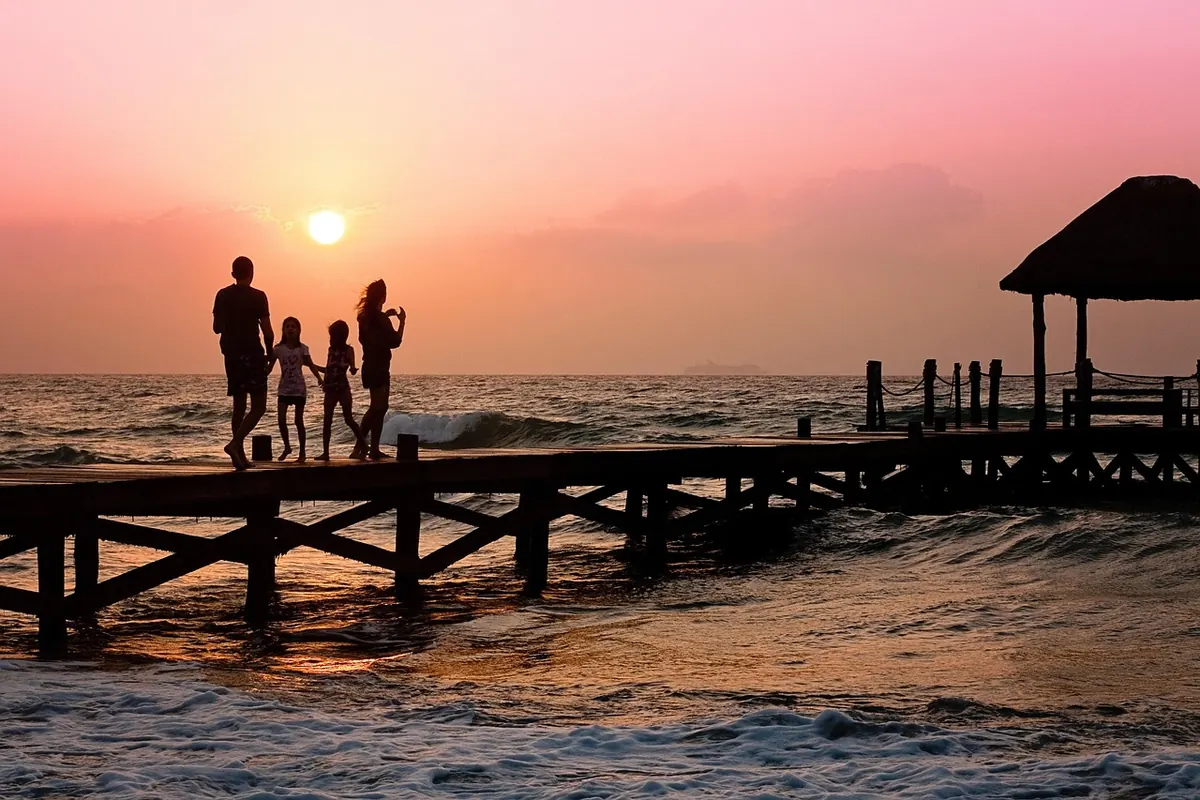
Rockpooling is one of the few outdoor activities where the reward arrives immediately. Twenty minutes with a net and a plastic tub and you have a hermit crab in a borrowed shell, a beadlet anemone closed tight like a squashed tomato, and a five-year-old who has forgotten the word "bored". It is also one of the few activities where the timing matters quite so much. Everything worth seeing sits below the high water mark, and the sea does not stay out for long. Get the tide wrong and you spend the morning walking backwards up a beach, holding a bucket and negotiating with a tired child.
Pools on the middle and lower shore are only pools when the sea has pulled back. At high water they are simply part of the seabed. That leaves a window of roughly two to three hours either side of low water when the interesting zone is exposed and walkable, and a much shorter one if you want to reach the lower shore, where the best creatures live.
The sea also comes back without asking. On a flat beach the rising water can move faster than a small child walks, and the channels and gullies that were dry on the way out fill first — often behind you, cutting off the route you used ten minutes ago.
Start with the tide table for the beach you are actually visiting, not the nearest big port. Estuaries, headlands and long sandy bays all shift the timing and the height of the tide, sometimes by half an hour or more. If you are heading somewhere with its own table, use it.
You are looking for two things: the time of low water, and the height in metres. The time tells you when to be there. The height tells you how much shore will be uncovered — a low water of 0.4m exposes far more than one of 2.1m.
The tide does not rise at a steady rate. After low water it creeps, then accelerates, then slows again into high water. A rough working guide is the rule of twelfths: in the first hour after low water the sea rises about one twelfth of the total range, two twelfths in the second hour, three in the third, three in the fourth, two in the fifth, and one in the sixth.
If the range that day is four metres, that means the water climbs roughly 33cm in the first hour, then 66cm, then a full metre in the third. So the first hour feels deceptively gentle. Do not let a calm start talk you into wandering further out than you can comfortably get back from.
A strong onshore wind and low air pressure can push water higher up the beach and make it arrive faster than the table suggests. If it is blowing hard from the sea, give yourself more margin and stay closer to the top of the shore.
Tides vary across the month. Around the full and new moon, spring tides give the biggest range: higher highs and lower lows. That is when the lower shore is at its best. Between those, neap tides give a smaller range, so even at low water a lot of the rock may still be submerged.
If you have a choice, pick a spring low with a small height figure, ideally in daylight and in the middle of the day rather than at dawn or dusk. A low water at 13:20 is close to a perfect family outing; a low water at 05:40 is a different kind of commitment.
Arrive about an hour before low water. The tide is still dropping, the shore is opening up, and the pools you find will be undisturbed. Aim to be turning back as the tide turns, and for small children, turn back earlier than feels necessary.
You need less than you think, but the right few things make the difference between a comfortable hour and a cold, scratched, unhappy one.
Keep one adult watching the sea rather than the pools. It is easy for everyone to end up heads-down over the same rock, facing inland, while the water moves in quietly behind them.
Stay within arm's reach of very young children, and keep older ones where you can see them. Wash hands after handling anything, and discourage anyone from putting fingers in their mouth. Do not touch jellyfish, and be careful of weever fish spines in sandy patches — the advice from any lifeguard on duty is worth following. If you get into difficulty, or see someone else in trouble, call 999 and ask for the coastguard. In an emergency, do not wait to see whether the situation resolves itself.
Look, then put back. Return every creature to the exact pool it came from, out of direct sun, and replace any stone the way you found it — the underside is a habitat, and flipping it back the other way destroys it. Do not prise limpets off rocks or pull anemones from their grip. Leave seaweed attached. Take photographs rather than souvenirs, and check local byelaws before collecting anything at all, including shellfish.
Check the tide table for your exact beach the day before, and note the time and height of low water. Pick a spring low in daylight. Work out when you need to leave the house, add twenty minutes because someone will need the loo, and arrive an hour before low water. Walk out slowly, watching the sea as much as the pools. When the tide turns, start back. Take pictures, put everything back, and finish with chips on the seafront. That is a rockpooling trip that ends the way it should: with tired children and nothing lost but a bit of pride over the one crab that got away.
Photo: JillWellington / Pixabay
Combine tide tables, storm surge forecasts and official weather warnings to judge winter coastal flood risk — plus a...
Chart datum is the baseline behind every UK tide height. Here's how to read predictions properly, add them to...

A practical checklist for dog owners on UK coasts and estuaries, covering tide tables, the rule of twelfths, cut-off...

Your daily guide to tides and coastal conditions.
