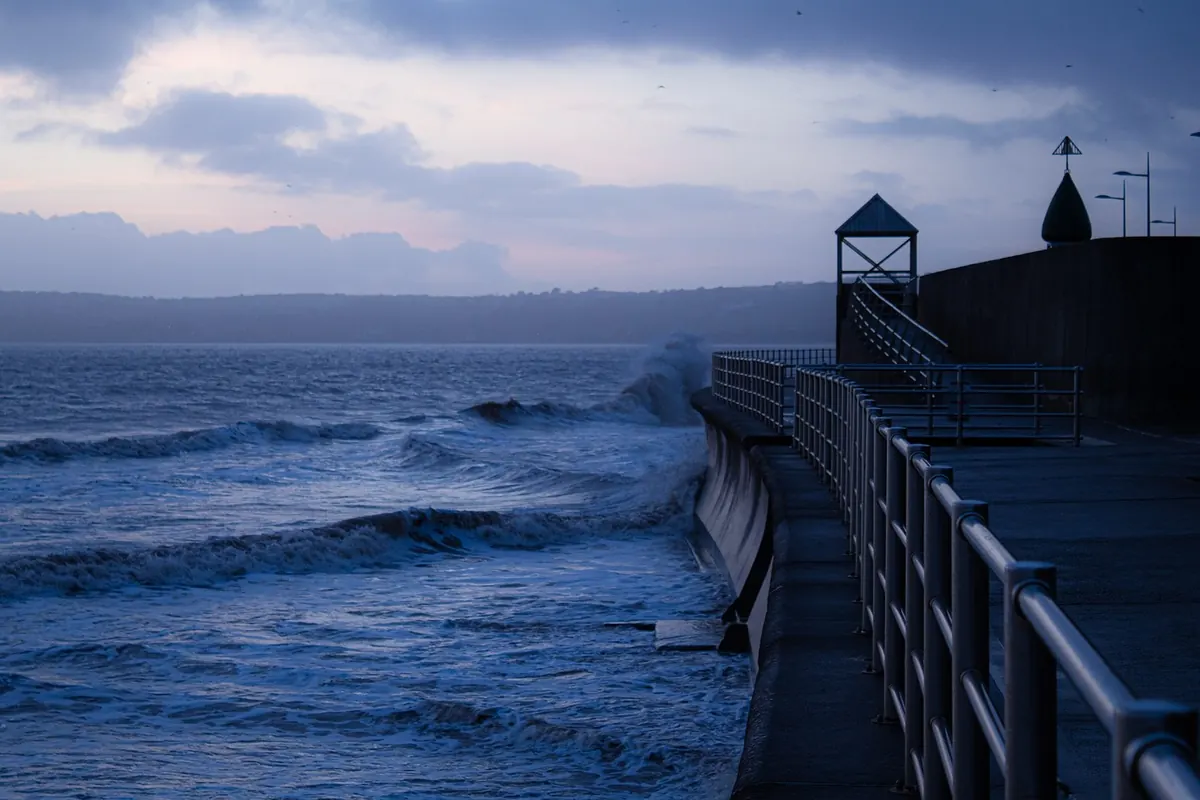
A calm morning, a full moon and a forecast that has been drifting west for two days. By the evening high water, the same tide that barely reached the slipway last week is running through the car park. Nothing in the tide table changed. What changed was everything stacked on top of it.
Every tide table is a prediction of the astronomical tide: the rhythm set by the moon, the sun and the shape of your coastline. That part is dependable, and it is only half the story. Winter adds three loads at once — low atmospheric pressure, strong onshore winds and bigger waves with a longer fetch behind them. Heavy rain adds a fourth, because a river in spate meeting an incoming tide at an estuary mouth has nowhere to go.
Tide tables tell you when. They are much less good at telling you how much. Put a deep low, a westerly gale and a spring tide together and a modest surge can lift water over defences that have held all autumn, often by a matter of centimetres.
A surge is the difference between the tide you expected and the water that actually arrives. It comes from two main effects, and they work together.
The first is pressure. Where the atmosphere is lighter than average, the sea surface rises slightly in response — a useful rule of thumb is roughly one centimetre for every millibar below normal. The second is wind. A persistent onshore gale physically shoves water against the coast, and the effect builds in shallow water and in funnel-shaped estuaries such as the Bristol Channel, the Wash, the Solway Firth and Morecambe Bay, where the sea has fewer places to spread out.
This matters because surges and tides are independent. A one-metre surge arriving at a neap high water may never reach the promenade. The same surge on a spring tide is an entirely different afternoon. So when you see a surge forecast, the first question is always: what is the tide doing at the same time?
No single source covers everything, so it is worth knowing the handful that do the heavy lifting:
Where two sources disagree, work on the more cautious one until you know better.
Ten minutes with a tide table and a weather forecast will tell you more than either one alone.
Surges do not always peak when the tide does. A cold front can arrive three hours late, a low can deepen faster than forecast, and the strongest winds sometimes come on the back of the system. In practice the highest water of the day may fall an hour or two either side of the printed high water time — and the water is often still rising when people assume it has turned.
Overnight high waters catch people out, because nobody is watching. If a warning is in force and high water falls at 2am, do the preparation in daylight. Move the car, lift anything stored at floor level in the garage, and know which route out of your road stays dry.
Every stretch of coast has a lowest point, and it is rarely the one you picture first. Think about the route you would drive at eleven at night: the dip in the road behind the sea wall, the car park at the back of the beach, the underpass, the slipway. Walk it in daylight during an ordinary high tide and note where the water reaches.
If you keep a boat on a swinging mooring, check lines and shackles before a named storm rather than during it. And if your property has flooded before, it is worth confirming what your insurance covers well before winter rather than in the middle of it — your insurer or a broker can talk you through the detail.
Once the clocks change, make this a habit. Check your local tide table for the next three days and note any high water above your usual mark. Glance at the weather warnings for your region. Open the flood warning page for your stretch of coast. If any of those three flags something, look at the wind direction and the pressure, then decide whether the danger window falls while you are at home or asleep.
If a severe flood warning is in force, the advice from the emergency services is straightforward: stay away from promenades, piers, sea walls and rocks, and never drive through floodwater. Watching a big sea is not worth the risk, and the surge does not care how well you know the coast.
Tide tables are the timetable. Warnings are the weather. Read together, they tell you whether to move the car — or simply enjoy the swell from a safe distance.
Photo: EdWhiteImages / Pixabay
Chart datum is the baseline behind every UK tide height. Here's how to read predictions properly, add them to...

A practical checklist for dog owners on UK coasts and estuaries, covering tide tables, the rule of twelfths, cut-off...

Rockpooling with children works best around low water. Here's how to read a tide table, pick a safe window and know...

Your daily guide to tides and coastal conditions.
